
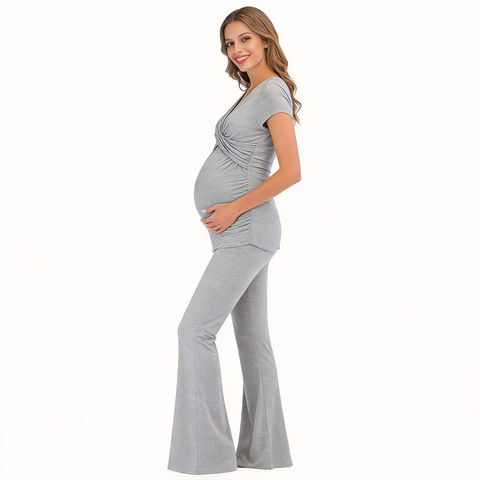
Maternity wear needs a clearer fit brief than a regular size extension. A product team needs to define how the garment should accommodate changing shape, what kind of support or adjustment is intended and which decisions must be tested in a physical sample. These five briefing areas do not guarantee a fit outcome; they help a brand turn a general comfort goal into reviewable development instructions.
1. Define the waist and front-volume approach
State whether the style is intended to sit over the bump, under the bump or at a regular waist position with an adjustable feature. Note the preferred waistband construction, panel height, elastic or drawcord direction, and any limits on visible gathering or bulk.
Also describe how front volume should be created. A shaped front panel, side gathers, pleats, a wrap construction or a knit stretch direction will each need different measurements and sample checks. A reference garment is useful when words alone cannot show the intended balance.
- Over-bump, under-bump or adjustable-waist direction
- Front-panel volume or gathering method
- Waistband construction and placement
- Reference image or comparable garment
2. Specify fabric behaviour and hip-room expectations
Fabric is part of the fit decision. Describe composition preferences, weight, stretch direction, recovery expectations and opacity requirements for the intended use. These are material requirements to review, not universal performance promises. The selected fabric must still be confirmed during sourcing and sampling.
Record which measurements need additional ease, where the garment should skim or support the body, and how the hem should sit when the front and back lengths differ. A base size and fit reference help the sample review focus on measurable observations.
- Fabric composition, hand feel and weight direction
- Stretch and recovery requirements to review
- Hip, thigh or bust ease priorities
- Base size and key point-of-measure references
3. Treat nursing access as a separate construction decision
If a style includes nursing access, identify the access type, location, overlap, closure and the appearance you expect when the feature is closed. A written note should be paired with a sketch or reference image so the sample can be reviewed against a visible intent.
Maternity is a current DONGFAN category. Share your product brief, selected material direction and target quantity for a project-specific review. DONGFAN's standard MOQ is 100 pieces per style, and the usual sample-development window is 2–3 weeks depending on the scope.
- Opening location and access method
- Panel overlap and closure direction
- Reinforcement or seam-placement requirements
- Sample purpose and target review date
FAQs
Which maternity fit details should be in the first brief?
Define the waist approach, front volume, fabric behaviour, key ease measurements and any nursing-access construction.
Can I use an existing garment as a fit reference?
Yes. Include clear photos, the size used and notes about what should be retained or changed in the new style.
Can I request organic cotton for maternity styles?
GOTS organic cotton fabric service is available on request. Material availability and applicable documentation must be confirmed for the selected fabric.